
Learn to Read Historical Hands
Practice identifying letterforms, abbreviations, word boundaries, and repeated strokes before turning a manuscript line into a careful transcription.

Read the Page Before the Words
Begin with line structure, repeated shapes, ascenders, descenders, and spacing. These visible clues help you build a document-specific alphabet instead of forcing modern letterforms onto an unfamiliar scribal hand.
Trace Letterforms
Compare recurring strokes, minims, long s, ligatures, and letter variants until the scribe’s alphabet becomes easier to recognize.
Decode Abbreviations
Study superscripts, contraction marks, and shortened words while keeping uncertain expansions clearly marked in the transcription.
Align Each Line
Keep the manuscript image and transcription together line by line so skipped words, and false readings are easier to notice.

Yukari Kido
I stopped trying to guess whole words and began comparing repeated strokes instead. Building a small reference alphabet made dense lines feel much more manageable.
A Careful Method for Difficult Writing
Historical handwriting becomes clearer when observation and interpretation are kept separate. The course approach begins with visible strokes, spacing, letter variants, and repeated words before moving toward meaning.
You practice preserving original spelling, marking doubtful characters, and checking uncertain readings against names, dates, and formulaic phrases elsewhere on the page. Short samples and line guides help you stay oriented while a document-specific alphabet develops gradually.
You practice preserving original spelling, marking doubtful characters, and checking uncertain readings against names, dates, and formulaic phrases elsewhere on the page. Short samples and line guides help you stay oriented while a document-specific alphabet develops gradually.
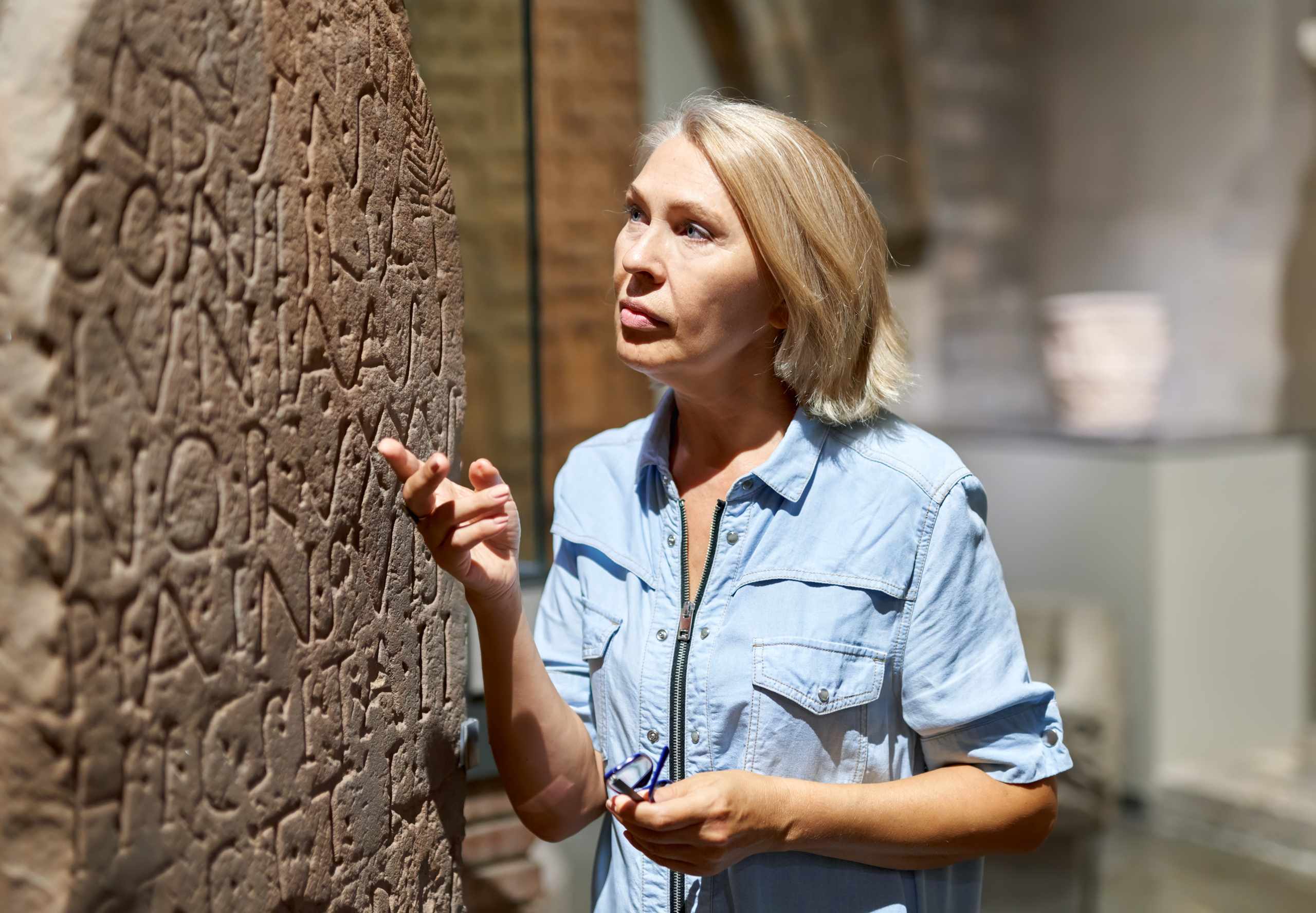
Turn Unfamiliar Strokes into Evidence
A reliable transcription is built from repeated comparison, not quick guesses. Work with clear manuscript images, zoom tools, annotation sheets, and reference alphabets while learning when context supports a reading and when it begins to distort what is actually visible.
Notice More Without Guessing More
Practice with repeated names, dates, line endings, and familiar formulas to confirm difficult letterforms. As the same scribal hand becomes more familiar, you can separate visible evidence from tentative interpretation and produce a more careful transcription.